

Refinancing a small business loan can sound simple. Replace an old loan with a new one, lower the payment, and give the business more breathing room. In some situations, that can be a smart financial move. In others, it can only move pressure farther into the future.
A lower monthly payment does not always mean the business saves money. Refinancing can add fees, extend debt longer, or require stronger collateral. Before you refinance a small business loan, compare the full cost of the old loan and the new one.
This guide explains when refinancing may help, what to review first, and how to avoid common mistakes. The goal is not to rush into another loan. The goal is to decide whether refinancing truly improves your business finances.
What Does It Mean to Refinance a Small Business Loan?
To refinance a small business loan, a business usually takes out a new loan to pay off an existing one. The new loan may have a lower rate, different payment schedule, longer repayment term, or different lender. In some cases, refinancing may also combine more than one debt into a single payment.
Business owners often consider refinancing when their current loan payment feels too high. Others look at refinancing after credit improves, revenue becomes steadier, or market rates change. Some owners also refinance to replace a short-term loan with a longer-term option.
The important point is that refinancing should serve a clear purpose. It should not simply move the same debt into a new package. The numbers need to show that the new loan improves the business’s position.
When Refinancing May Help a Small Business
Refinancing may help when the new loan gives the business better terms than the current loan. A lower interest rate may reduce total borrowing cost. A better payment schedule may also make the loan easier to manage.
Refinancing may also help if the current loan has daily or weekly payments that strain operations. Moving to a monthly payment schedule can make planning easier. This can be especially useful for businesses with seasonal revenue or uneven cash flow.
Some owners refinance because the original loan was taken during a stressful period. Fast funding can be useful, but it often comes with higher costs. Once the business is more stable, a better loan may be worth exploring.
For broader repayment planning, owners may also review using a business loan calculator to plan your repayment strategy. A calculator can help compare payment size, total cost, and repayment length before choosing a new loan.
When Refinancing May Not Save Money
A lower payment can be helpful, but it can also be misleading. If the new loan stretches repayment over a much longer period, the business may pay more interest overall. The monthly payment may shrink while the total cost grows.
Fees can also reduce or erase the benefit of refinancing. Origination fees, closing costs, prepayment penalties, lien filing fees, and legal costs may apply. These costs should be included before deciding whether the refinance truly saves money.
Refinancing may also be a warning sign if the business cannot afford normal operations without repeated borrowing. In that case, the issue may be cash flow, pricing, expenses, or revenue timing. Another loan may provide temporary relief without solving the real problem.
Start by Reviewing Your Current Loan
Before you compare new offers, review the loan you already have. Look at the remaining balance, interest rate, monthly payment, repayment schedule, maturity date, and payoff amount. Also check whether the loan has a prepayment penalty.
The payoff amount is especially important. It may not be the same as the balance shown on a recent statement. Some lenders calculate interest, fees, or payoff charges differently, so ask for a written payoff quote.
You should also review collateral and personal guarantee requirements. If you refinance, the new lender may ask for similar or stronger protections. That can affect your risk even if the payment looks better.
Owners who need a refresher on guarantees may review personal guarantees on business loans. A lower payment is not the only part of a loan that deserves attention.
Compare the Old Loan and New Loan Side by Side
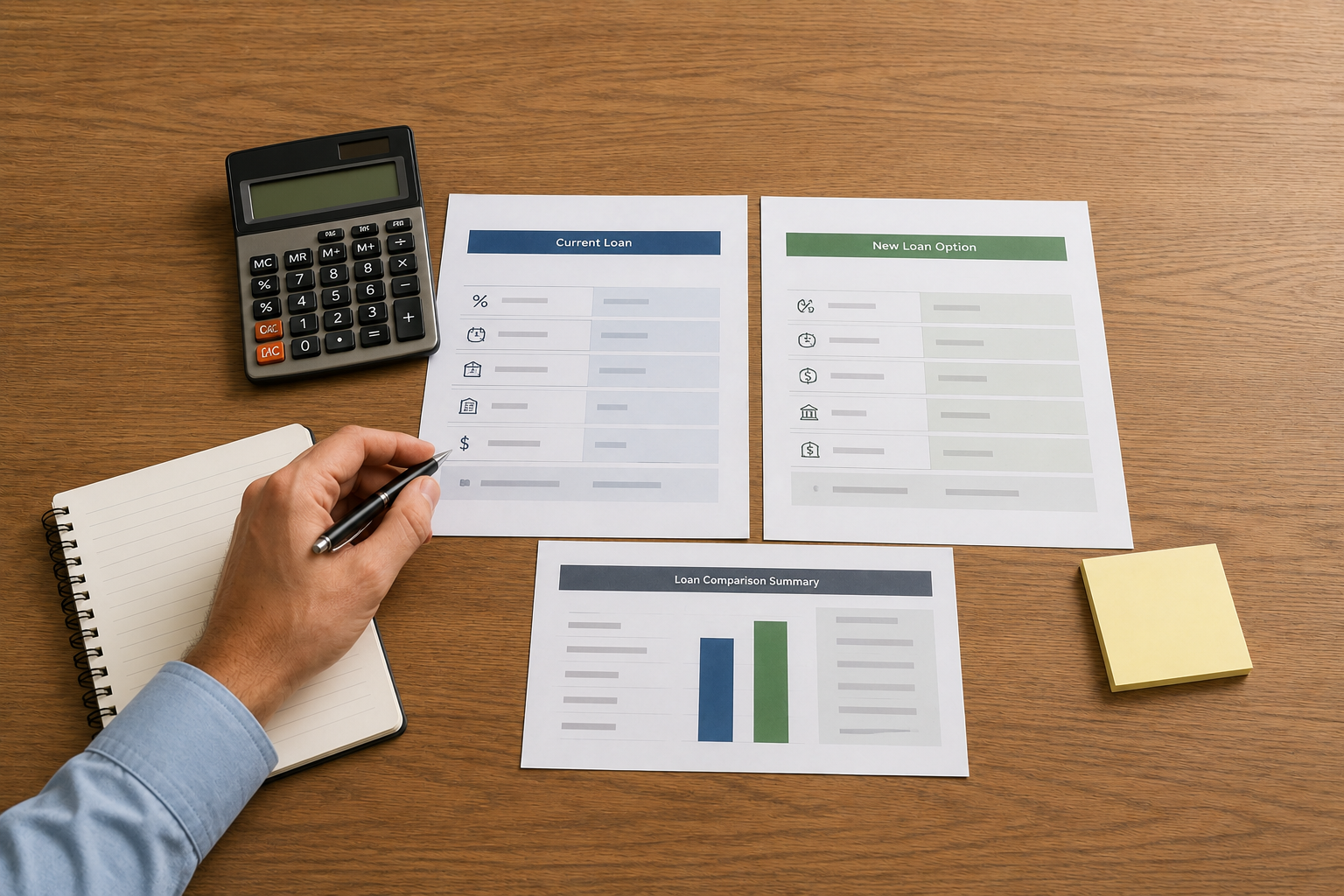
The best refinancing decisions usually start with a side-by-side comparison. Write down the current loan terms and the proposed new terms. Compare monthly payment, total interest, repayment length, fees, collateral, and personal guarantee language.
Do not compare only the payment. A lower payment may help cash flow, but it does not tell the whole story. The total repayment amount shows how much the loan may cost over time.
A business loan calculator can help with this step. Use it to test different loan amounts, interest rates, and repayment terms. Then compare the results with your current loan payoff quote.
For a fuller comparison process, owners may review how to compare business loan offers before you sign. Refinancing should be reviewed with the same care as a first loan.
Check the Break-Even Point
The break-even point shows how long it takes for refinancing savings to cover the cost of refinancing. For example, if refinancing costs $2,000 and saves $250 per month, the break-even point is about eight months. After that point, the business may begin to benefit from the lower payment.
This simple comparison can prevent expensive mistakes. If you plan to pay off the loan quickly, high refinancing costs may not make sense. If you expect to keep the new loan longer, the savings may be more useful.
Break-even math is not perfect, but it gives owners a clearer starting point. It helps separate real savings from a loan that only looks cheaper. If the numbers do not work, refinancing may not be the right move.
Look Carefully at Cash Flow
Cash flow is often the main reason business owners refinance. A lower payment can free up money for payroll, inventory, rent, taxes, or supplier costs. That breathing room can be valuable when the business is otherwise healthy.
However, refinancing should not hide a cash flow problem that needs direct attention. If expenses are consistently higher than income, the business needs a broader plan. That plan may include pricing changes, expense cuts, better collections, or slower growth.
Ask whether the new payment fits your slowest months, not only your strongest months. Seasonal businesses should be especially careful. A payment that works in peak season may become stressful later.
For more on repayment capacity, owners may review why cash flow comes before a business loan application. The same cash flow review matters before refinancing too.
Watch for Longer Terms That Increase Total Cost
Longer repayment terms can lower monthly payments, which may help short-term cash flow. The tradeoff is that the loan may stay on the books longer. More months of interest can increase the total cost.
This does not always make a longer term wrong. Some businesses need lower payments to stabilize operations. The key is knowing what you are trading before you sign.
Compare two numbers before deciding. First, look at the monthly payment. Then look at the total amount repaid over the full term.
Do Not Ignore Fees and Penalties
Refinancing costs can appear in several places. Some fees are paid upfront, while others are rolled into the new loan. Rolled-in fees may feel easier, but they can increase the loan balance.
Ask each lender for a clear list of all costs. This should include application fees, origination fees, closing costs, servicing fees, lien fees, and documentation charges. Also ask whether your current lender charges a penalty for early payoff.
Fees do not automatically make refinancing a bad idea. They simply need to be included in the math. A refinance that ignores fees may look better than it really is.
Review Collateral and Personal Guarantees
A new loan may come with new risk. Even if the payment improves, the lender may require collateral, a blanket lien, or a personal guarantee. These terms can affect both the business and the owner personally.
Do not assume the new loan is safer because the payment is lower. Read the agreement carefully and ask questions before signing. If the loan documents are hard to understand, consider asking a qualified adviser to review them.
Collateral and guarantees deserve special attention when refinancing unsecured or lightly secured debt. A lower rate may come with stronger lender rights. That tradeoff may or may not be acceptable.
Can SBA Loans Be Used for Refinancing?
SBA-backed loans may be an option for some refinancing situations, depending on eligibility and loan structure. The SBA 7(a) program is the agency’s primary business loan program. Terms are negotiated between the borrower and participating lender within SBA requirements.
SBA refinancing can be more involved than a simple online loan application. Lenders may request tax returns, financial statements, debt schedules, business records, and a clear explanation of how refinancing helps the business. The process may take longer, but the terms may be better for some qualified borrowers.
Not every debt will qualify for refinancing through an SBA-backed loan. Rules can change, and lender interpretation can vary. Business owners should confirm current requirements with an SBA lender before relying on this option.
Questions to Ask Before You Refinance
Before you refinance a small business loan, slow down and ask direct questions. A lender should be able to explain how the new loan improves your situation. If the answer is vague, keep asking.
- What is the exact payoff amount on my current loan?
- Will I pay a prepayment penalty?
- What is the interest rate on the new loan?
- What fees will I pay upfront or finance into the loan?
- What will the new monthly payment be?
- How much will I repay over the full term?
- Will the new loan require collateral or a personal guarantee?
- Does the new payment fit my slowest revenue months?
- How long will it take to break even after refinancing costs?
- What happens if I want to pay off the new loan early?
These questions can reveal whether the refinance is truly helpful. They can also uncover costs that were not obvious at first. A good refinancing decision should become clearer as the details come together.
Common Refinancing Mistakes to Avoid
One common mistake is refinancing only because the payment is lower. That can help in the short term, but it may increase long-term cost. Business owners need both numbers before making a decision.
Another mistake is refinancing under pressure. If a business is desperate for relief, it may accept terms that create future strain. Fast decisions are often expensive decisions.
A third mistake is using refinancing to avoid deeper financial review. If the business has repeated cash shortages, the owner should examine income, expenses, debt, and operating habits. Refinancing can support a plan, but it should not replace one.
If payment trouble is already close, owners may review how to talk to your lender when cash flow gets tight. A lender conversation may help clarify options before choosing a refinance.
Signs Refinancing May Be Worth Considering
Refinancing may be worth considering if your credit has improved since you took the original loan. Better credit may help you qualify for a lower rate or stronger terms. Improved revenue and cleaner financial records may also help.
It may also make sense if your current loan has a very short repayment schedule. Daily or weekly payments can be difficult for some businesses. A better-structured loan may reduce stress and make cash planning easier.
Refinancing may also help if your current loan no longer fits your business model. A business that has grown, stabilized, or changed direction may need a different repayment structure. The loan should fit the business as it exists now.
Signs Refinancing May Be Risky
Refinancing may be risky if the new loan adds fees without meaningful savings. It may also be risky if the lender pressures you to sign quickly. A legitimate lender should give you time to review the terms.
Be careful if refinancing requires pledging more collateral than the business can reasonably risk. Also be cautious if the new loan includes confusing payment terms. Confusion is not a good foundation for a borrowing decision.
Refinancing may also be risky if the business is using new debt to cover recurring losses. In that situation, the business may need financial restructuring, not simply a new loan. A lender, accountant, or business adviser may help you sort through the options.
Build a Repayment Plan Before Signing
If refinancing appears helpful, build a repayment plan before signing. Decide where the monthly payment will come from. Review sales patterns, expense timing, tax obligations, and expected slow periods.
A repayment plan should also include a backup strategy. Ask what you will do if sales drop, costs rise, or a major customer pays late. Planning for stress before it happens can protect the business later.
Keep the plan realistic. Refinancing should make repayment easier to manage, not depend on perfect conditions. If the plan only works during your best months, keep reviewing.
Owners who want to understand repayment risk may also review what happens if you miss a business loan payment. Knowing the risks can help owners plan before a problem grows.

Compare More Than One Lender
Different lenders may offer very different refinancing terms. Banks, credit unions, SBA lenders, online lenders, and specialty finance companies may all evaluate risk differently. Comparing offers can help you avoid accepting the first option too quickly.
When comparing lenders, look beyond rate and payment. Review fees, repayment schedule, customer support, prepayment rules, collateral requirements, and reporting practices. A slightly higher rate may be acceptable if the full loan structure is safer.
Keep written notes as you compare. A simple table can prevent confusion. It also helps you see which offer best supports your actual business goals.
How Refinancing Differs From Loan Renewal
Refinancing and renewal can sound similar, but they are not always the same. Refinancing usually means replacing an existing loan with a new one. Renewal may involve extending, replacing, or continuing a borrowing relationship with the same or another lender.
The practical questions are similar. Owners should review cost, repayment pressure, cash flow fit, collateral, fees, and future borrowing needs. The terms matter more than the label.
For related guidance, owners may review business loan renewal and what owners should review before borrowing again. Both decisions deserve careful comparison before signing.
Final Thoughts on Refinancing a Small Business Loan
Refinancing can be a useful tool when it lowers cost, improves cash flow, or replaces a difficult loan with better terms. It can also create problems if the new loan only delays repayment or adds hidden costs. The difference comes down to careful comparison.
Before you refinance a small business loan, review your current payoff amount, new loan costs, monthly payment, total repayment amount, and cash flow fit. Ask direct questions and compare more than one option. A refinance should make the business stronger, not simply move pressure into the future.
The best refinancing decision is not always the loan with the lowest payment. It is the loan that fits your business, reduces avoidable strain, and supports a realistic repayment plan. When the numbers are clear, owners can borrow with more confidence and fewer surprises.
Helpful Resources
- U.S. Small Business Administration: 7(a) Loans
- SBA: 7(a) Loan Terms, Conditions, and Eligibility
- Federal Reserve Small Business Credit Survey: 2026 Report on Employer Firms
- Federal Reserve: Small Business Credit Options
Editor’s Note: This article was updated and expanded in June 2026 for clarity, accuracy, and reader usefulness.
Disclaimer: This article is for general educational purposes only and is not financial, legal, tax, or lending advice. Business owners should review loan documents carefully and consult qualified professionals before making borrowing decisions.
Photo Credit: All images © Sloan Digital Publishing and licensed stock sources. Used with permission.