
Editor’s Note: This article was updated in September 2025 to reflect new regulations, expanded fintech adoption, and repayment strategies. It has been rewritten to provide a more complete and actionable guide for small business owners seeking financing.
Why Loan Requirements Matter in 2025
Loan requirements are more than a checklist—they are a roadmap to proving your business is stable, trustworthy, and prepared for growth. In 2025, lenders are balancing optimism with caution. They want to fund businesses that can both repay on time and thrive long-term. Knowing the requirements in advance helps you gather stronger evidence of creditworthiness and avoid delays.
Core Documents Every Lender Will Require
While exact requests differ, most lenders will expect you to provide the following documents. Each one tells a different part of your financial story:
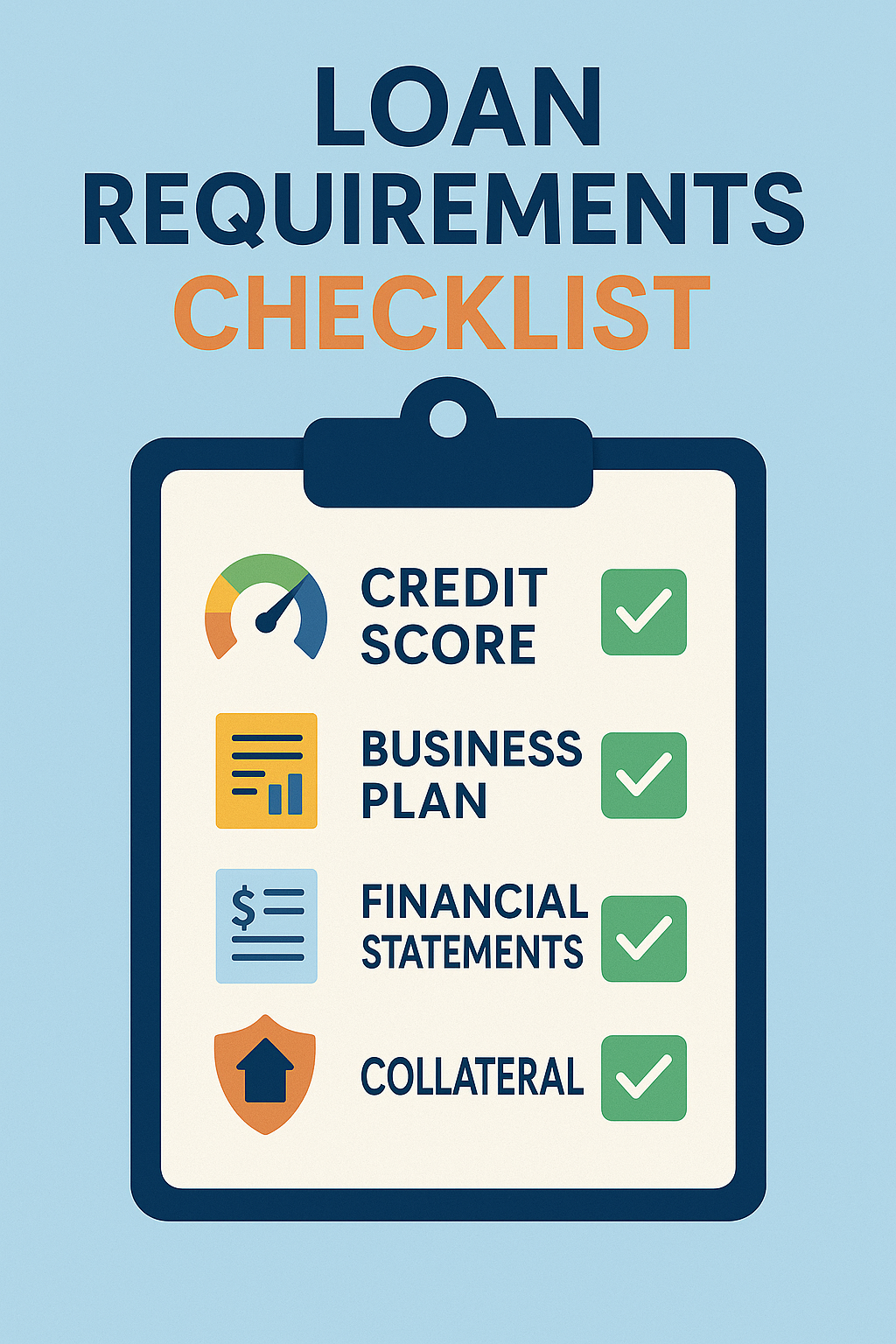
- Financial Statements: These include balance sheets, income statements, and cash flow reports. They reveal whether your business generates profits, how stable your revenue is, and whether you can handle new debt. Accuracy matters—outdated or incomplete statements can weaken your credibility.
- Tax Returns: Lenders often request two to three years of both business and personal returns. They use them to verify reported income and ensure your filings are consistent with financial statements. Missing returns or red flags like frequent losses may trigger additional questions.
- Bank Records: Monthly or quarterly statements show real-time cash flow and how you manage deposits and withdrawals. Consistent deposits and controlled expenses signal financial discipline.
- Business Plan: A plan outlines your operations, financial forecasts, and strategy for growth. A strong business plan demonstrates how the loan will support expansion or stability. See why a strong business plan matters here.
- Credit History: Personal and business credit scores remain key indicators. Lenders want to see on-time payments, manageable debt levels, and responsible use of credit lines.
- Collateral Documentation: Deeds, invoices, or equipment titles can be used to secure loans. Even if collateral isn’t required, offering it can reduce perceived risk and improve your approval odds.
Regulatory Shifts in 2025
Loan applications in 2025 reflect a changing regulatory environment. Governments are tightening oversight, requiring lenders to adopt stricter checks. Here’s what you need to know:
- KYC Verification: Digital identity checks are mandatory. Be prepared to provide scanned IDs, proof of address, and ownership documents.
- AML Standards: Unexplained deposits or unusual cash movements must be documented. Businesses with international transactions may face additional scrutiny.
- Data Transparency: More lenders require standardized financial formats, often linked directly to accounting platforms. This reduces fraud but demands precise record-keeping.
- ESG Factors: Some SBA and bank programs are requesting details on environmental and social practices. While not yet universal, businesses with strong ESG practices may gain a competitive edge.
Failure to meet these regulatory requirements can cause application delays or outright rejections—even if your finances are strong.
Technology in Lending
Technology is transforming how lenders assess applications. By 2025, fintech platforms and even traditional banks are relying on tools that speed up decisions while maintaining strict oversight:
- AI Underwriting: Artificial intelligence models evaluate cash flow, credit, and even payment patterns. This reduces bias but makes transparency critical—hidden weaknesses are harder to overlook.
- Open Banking: Lenders increasingly ask for access to accounting software like QuickBooks or Xero. These integrations allow them to verify data instantly.
- Blockchain Records: Some lenders use blockchain verification to confirm asset ownership or transaction histories, reducing the chance of fraud.
According to industry surveys, over 60% of small business borrowers in the U.S. turned to fintech or hybrid platforms in 2025. These platforms often approve loans within days, though interest rates can be higher than traditional banks.
Comparing Requirements Across Lender Types
Different lenders emphasize different requirements. Knowing where you fit saves time and helps you prepare better applications:
Banks
Banks remain the most conservative. They demand full documentation, excellent credit scores, and often collateral. The benefit is lower rates and long repayment terms, but approvals are slow.
Credit Unions
Credit unions are often more flexible, especially for members with strong community ties. They still require detailed financials, but may be more open to working with businesses that banks reject.
SBA Loans
Backed by the Small Business Administration, SBA loans involve the most paperwork. Expect to complete SBA forms, provide detailed projections, and prepare for weeks of processing time. The advantage is better terms and lower down payments. Read our full SBA loan guide for details.
Online Lenders
Online lenders prioritize speed. Many will approve loans with limited documentation, relying on AI-driven analysis. However, this convenience comes with higher interest rates and shorter repayment windows.
The Importance of the DSCR Ratio
The Debt Service Coverage Ratio (DSCR) is one of the most critical measures. It compares net operating income to total debt service. A DSCR above 1.25 means you generate 25% more income than required to cover debt obligations. If your DSCR is too low, focus on improving cash flow or reducing existing debt before applying.
Case Studies: How Requirements Play Out
Retail Store: A boutique applies for $75,000. The lender requests seasonal sales reports and supplier agreements. The store secures approval by pledging inventory as collateral and presenting stable multi-year revenue data.
Manufacturing Firm: Seeking $500,000, a factory provides detailed production costs, equipment appraisals, and contracts with large clients. The strong order pipeline convinces the lender, even though the loan size carries risk.
Service Business: A marketing agency requests $100,000 but lacks collateral. They turn to a fintech lender, which approves quickly but at a higher rate. The trade-off is faster funding at a greater long-term cost.
Startup vs. Established Business
Startups often face tighter restrictions due to limited financial history. Established businesses, on the other hand, rely on long-term records and collateral to secure favorable terms. If you are launching a business, prepare for stricter scrutiny. Review our guide on startup funding to learn how requirements differ for new ventures.
Repayment Strategy: A Non-Negotiable Requirement
Even if you meet all other requirements, lenders want to know you can repay the loan responsibly. Consider these repayment scenarios:
- $50,000 at 7% for 5 years: Approximate monthly payment is $990, with total interest of about $9,400.
- $100,000 at 10% for 7 years: Approximate monthly payment is $1,660, with total interest of about $39,200.
- $250,000 at 8% for 10 years: Approximate monthly payment is $3,030, with total interest exceeding $113,000.
Showcasing these repayment strategies signals preparedness. Use our loan calculator guide to generate tailored projections.
Tips to Improve Loan Approval Odds
Improving approval odds takes more than submitting documents—it requires strategic preparation:
- Strengthen Credit: Reduce credit utilization, make early payments, and correct errors before applying.
- Keep Records Current: Lenders dislike outdated financials. Update statements and reconcile accounts monthly.
- Provide Collateral: Offering assets voluntarily can tip the balance in your favor.
- Boost DSCR: Increase income streams or restructure debt to improve coverage ratios.
- Time Your Application: Apply when revenues are strong and seasonal dips won’t distort the picture.
- Shop Around: Compare offers across banks, credit unions, SBA programs, and fintech lenders.
For more detail, see our article on improving loan approval odds.
Conclusion
Meeting small business loan requirements in 2025 means more than submitting forms. It requires adapting to new regulations, using technology effectively, comparing lenders wisely, and demonstrating repayment strength. By approaching the process with preparation and strategy, you can improve your odds of securing the right loan to grow your business successfully.
Images created in collaboration with and for businessloanpress.com