

Deciding do I need a small business loan is rarely as simple as it sounds. Most business owners do not struggle with access to financing. They struggle with knowing when financing actually fits their situation. That distinction matters more than approval.
Some businesses borrow too early and carry unnecessary pressure. Others wait too long and limit their options. In both cases, the issue is not the loan itself. It is the timing and the reason behind the decision. Understanding those signals is what separates helpful financing from harmful borrowing.
Why the Question Matters More Than the Loan Itself
The question of whether you need a loan is more important than the loan itself. Financing changes how your business operates. It affects timing, obligations, and flexibility across your financial system. That impact continues long after the funds are received.
When this decision is made carefully, it supports stability or growth. When it is made under pressure, it often creates new challenges. This is why clarity must come before action. The goal is not to secure funding. The goal is to determine whether funding fits your current reality.
Signs You May Need a Small Business Loan for Stability
Some businesses face predictable cash flow gaps even when operations are steady. These gaps often come from timing differences between incoming revenue and outgoing expenses. When those patterns repeat consistently, financing may help stabilize operations.
For example, payroll and vendor payments may come due before receivables arrive. This creates pressure even when the business is profitable. In these situations, a loan can smooth timing without changing the underlying structure. You can explore this further in cash flow forecasting.
Stability-focused borrowing works best when the business already functions well. The loan does not fix a problem. It supports an existing system that needs better timing.
Signs You May Need a Loan to Support Growth
Growth often creates its own type of pressure. Increased sales usually require more inventory, staffing, or operational capacity. These costs appear before the revenue fully arrives. That delay can strain cash flow even in a healthy business.
When growth is controlled and predictable, financing can support expansion. It allows the business to move forward without slowing momentum. This situation is explained in more detail in revenue growth and cash flow timing.

In this case, borrowing does not create growth. It supports growth that is already happening. The key is ensuring that expansion remains manageable.
Signs You May Not Need a Business Loan Yet
Not every cash flow challenge requires financing. Some problems come from internal systems that can be improved without borrowing. Delayed invoicing, weak collections, or poor expense timing often create avoidable pressure.
When these issues are present, a loan may hide the problem rather than solve it. Improving accounts receivable or payment timing can often restore balance without adding debt. These adjustments strengthen the business more effectively than short-term funding.
Temporary fluctuations also do not always justify borrowing. Seasonal slowdowns or one-time expenses may resolve without long-term commitments. In these cases, patience may be more valuable than financing.
When Borrowing Can Make the Situation Worse
Borrowing creates risk when the purpose is unclear. Loans taken without a defined objective often lead to confusion and added pressure. Without direction, the funds may be used inefficiently.
Reactive decisions increase this risk. When urgency drives borrowing, costs tend to rise and options become limited. This pattern often leads to repeated short-term solutions. Over time, that reliance creates dependency.
Understanding short-term loan risks helps clarify why this happens. Fast access to capital does not always align with long-term stability. In some cases, it moves problems forward instead of resolving them.
How to Evaluate Your Situation Before Deciding
Evaluating whether you need a loan begins with understanding your cash flow. You need to know when money enters and leaves your business. This timing determines whether financing supports your operations or complicates them.
Forecasting plays a critical role in this process. A simple projection can reveal patterns that are not obvious day to day. It allows you to see whether gaps are temporary or structural.
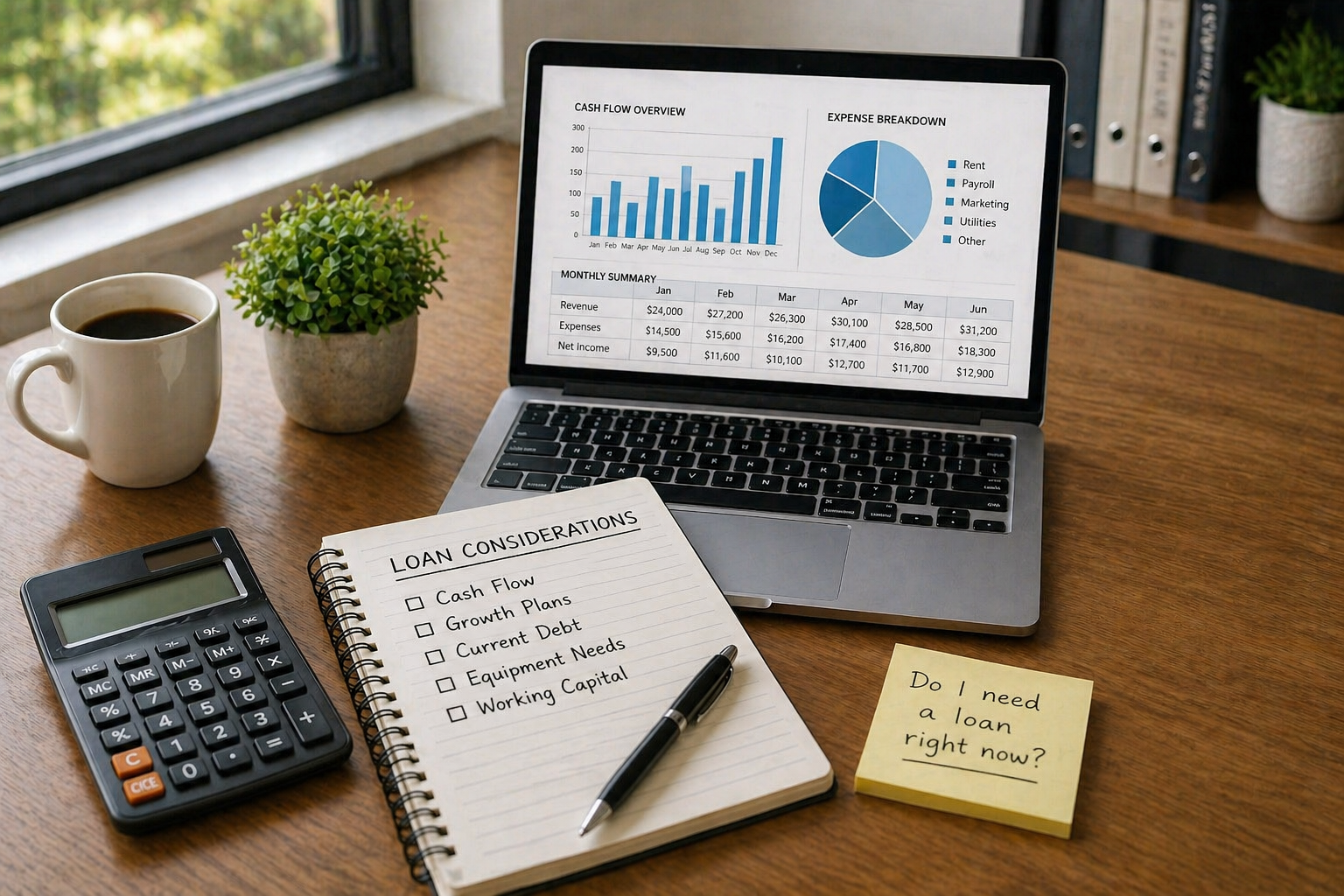
You should also define a clear purpose for borrowing. That purpose may involve stabilizing operations or supporting growth. Without that clarity, financing introduces uncertainty instead of reducing it.
Finally, test your repayment under realistic conditions. If repayment depends on perfect performance, the loan creates risk. A stronger approach accounts for variability and maintains flexibility.
How This Decision Connects to Long-Term Financial Control
A business loan becomes part of your financial system. It interacts with receivables, expenses, and liquidity management. When these elements are aligned, financing can improve flexibility.
The cash conversion cycle provides a useful way to understand these relationships. It shows how timing affects performance and stability. Businesses that monitor this system make better borrowing decisions.
For additional guidance, the U.S. Small Business Administration offers structured resources for evaluating financial decisions.
Conclusion: The Right Question Is About Fit, Not Access
Asking do I need a small business loan shifts the focus away from availability and toward alignment. Financing is not simply a resource. It is a structural decision that affects how the business operates over time.
The key question is not whether a loan is possible, but whether it fits the situation it is meant to support. When cash flow gaps are predictable or growth is controlled, borrowing can be useful. When pressure is unclear or persistent, it may increase risk instead.
Seen clearly, a loan becomes part of a broader system rather than a separate solution. It works best when it supports clarity and structure, not urgency. This perspective allows business owners to make decisions with greater control.
The goal is not simply to access capital. It is to ensure that each decision strengthens the business over time rather than adding new pressure.
Financial Information Disclaimer: This content is for informational purposes only and does not constitute financial, legal, or tax advice. Readers should consult qualified professionals for guidance specific to their situation.
Photo Credit: All images © Sloan Digital Publishing and licensed stock sources. Used with permission.