
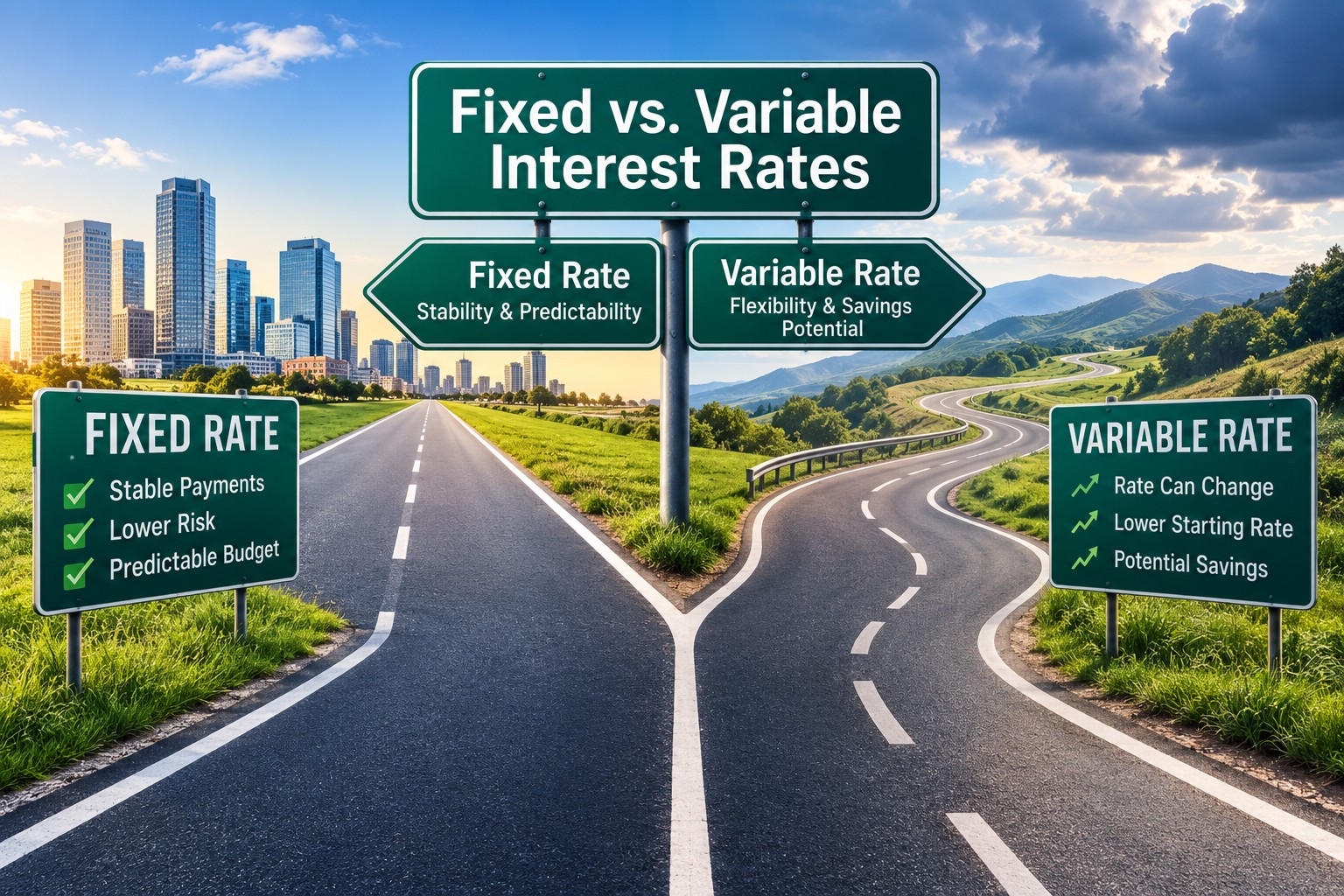
Small business owners often compare fixed vs variable interest rates when choosing a loan, but the choice affects more than the rate shown in the offer. It can change how predictable your payments are, how much pressure the loan puts on cash flow, and how much risk your business carries over time. A lower starting rate may look attractive, but it is not always the safest or least expensive option.
The better question is not simply which loan looks cheaper today. The better question is which payment structure your business can handle if conditions change. A loan should support the business, not create a new cash-flow problem later.
Fixed and variable rates each have a place in business financing. One offers more certainty, while the other may offer more flexibility and possible savings. Understanding the difference can help you compare loan offers with more confidence before signing an agreement.
What Fixed vs Variable Interest Rates Mean
A fixed interest rate stays the same for the life of the loan. If your business signs a loan with a fixed rate, the interest rate does not rise or fall because market rates change. This makes the payment more predictable and easier to include in a budget.
A variable interest rate can change over time. The lender usually ties the rate to an index or benchmark, then adds a margin. If the benchmark rises, your loan rate may rise, and if the benchmark falls, your loan rate may fall.
That means a variable-rate loan can start with a lower payment but still carry more uncertainty. A business may benefit if rates fall or stay low, but it may face higher payments if rates rise. This tradeoff is why the lowest starting rate does not always lead to the best loan decision.
Fixed vs Variable Interest Rates at a Glance
| Feature | Fixed Rate Loan | Variable Rate Loan |
|---|---|---|
| Payment stability | More predictable | Can change when the rate resets |
| Starting rate | May be higher | May be lower |
| Risk if rates rise | Lower risk | Higher risk |
| Benefit if rates fall | Usually limited unless you refinance | Payment or interest cost may decrease |
| Best fit | Businesses that need certainty | Businesses that can tolerate payment changes |
Why the Starting Rate Can Be Misleading
Many borrowers focus on the starting interest rate because it is easy to compare. If one lender offers an 8% fixed rate and another offers a 7% variable rate, the variable loan may look better at first glance. However, the starting rate is only one part of the total borrowing picture.
The real cost depends on what happens during the life of the loan. If the variable rate rises, the payment may rise too, and the early savings may disappear. A loan that looked affordable at first can become difficult if cash flow is already tight.
Business owners should also compare the annual percentage rate, fees, repayment schedule, and loan terms. Interest rate and APR are not always the same thing. Our guide on APR vs interest rate explains why borrowers should compare more than the advertised rate.

How Fixed-Rate Business Loans Work
With a fixed-rate business loan, the interest rate remains constant. The scheduled payment usually stays the same as well, assuming the loan has a standard repayment structure. This predictability is the main reason many business owners choose fixed-rate financing.
Fixed payments can help with planning. A business owner can look ahead and know how much the loan will require each month. That can be especially helpful when payroll, rent, vendor bills, insurance, and taxes already need careful timing.
Fixed-rate loans often fit longer-term borrowing needs. If your business expects to carry the loan for several years, stable payments may be worth more than a slightly lower starting rate. This is especially true when a payment increase would threaten payroll, inventory, or essential operations.
The tradeoff is that fixed rates may start higher than variable rates. If market rates fall later, your payment will not automatically drop. You may need to refinance to benefit from lower rates, and refinancing can involve fees, paperwork, and another approval process.
How Variable-Rate Business Loans Work
With a variable-rate business loan, the interest rate can move up or down after the loan begins. The loan agreement should explain which index or benchmark the lender uses, how often the rate can reset, and how the lender calculates the new rate. These details matter because they determine how much your payment may change.
A variable loan is often described as an index plus a margin. The index changes with market conditions, while the margin is the amount the lender adds. Together, they create the rate your business pays.
Variable rates may appeal to business owners because the starting rate can be lower. That lower initial payment may help near-term cash flow, especially if the business expects to repay the loan quickly. It may also appeal to owners who believe rates may fall during the loan term.
The risk is that the payment may increase. A business that can handle the starting payment may struggle if the rate resets higher. That is why variable-rate loans require more cash-flow flexibility and closer attention to the loan agreement.
What to Review Before Choosing a Variable Rate
Before accepting a variable-rate loan, ask the lender to explain the rate structure in plain language. You should know the index, the margin, the reset schedule, and whether the loan has any caps or floors. If the lender cannot explain those terms clearly, slow down before signing.
The reset schedule tells you how often the rate can change. A loan that resets monthly may create more uncertainty than one that resets annually. Frequent changes can make budgeting harder for businesses with uneven revenue.
A cap may limit how much the rate can rise during one adjustment or over the life of the loan. A floor may prevent the rate from falling below a certain level. Both details affect your best-case and worst-case outcomes.
Some lenders may also offer a way to convert from variable to fixed later. That feature can sound reassuring, but it deserves careful review. Fees, timing rules, approval requirements, or contract limits may affect whether conversion is truly useful.
A Simple Example: Lower Today Does Not Always Mean Cheaper
Imagine a business comparing two five-year loan offers. One loan has a fixed rate with a payment the owner can plan around. The other starts with a lower variable rate and a lower first payment.
At first, the variable loan may look like the obvious choice. It saves money in the beginning and gives the business a little extra room. If rates rise during the second year, though, the payment may increase at the next reset.
That increase can change the whole calculation. The business may end up paying more over time than it would have paid with the fixed-rate option. It may also face higher payments at the same time cash flow is already under pressure.
This is why business owners should test more than one scenario. Do not only ask what the payment is today. Ask what the payment could become if the rate rises by one, two, or three percentage points.

When a Fixed Rate May Be the Better Choice
A fixed rate may be the better fit when your business needs stable payments. If margins are tight, predictable loan payments can protect daily operations. This can be especially important for payroll-heavy businesses or businesses with narrow seasonal windows.
A fixed rate may also make sense for long-term loans. The longer the repayment period, the more time there is for interest rates to change. A business that cannot absorb payment increases may prefer certainty over possible savings.
Fixed rates can also help owners who want simpler planning. Some business owners would rather pay a little more at the start than worry about future resets. That peace of mind has real value when the loan supports an essential part of the business.
When a Variable Rate May Make Sense
A variable rate may make sense when the business has a short repayment timeline. If you expect to repay the loan quickly, the risk of several rate changes may be lower. This can make the lower starting rate more appealing.
Variable rates may also fit businesses with strong cash flow and a meaningful cushion. If your business can handle a higher payment without disrupting operations, you may be able to accept more rate risk. That does not remove the risk, but it may make the risk manageable.
A variable rate can also be reasonable when the contract has clear protections. Reasonable caps, a manageable reset schedule, and clear conversion language can reduce uncertainty. Business owners should still avoid choosing a variable loan only because the first payment looks better.
How Rate Changes Can Affect Cash Flow
Cash flow is often where the fixed-versus-variable decision becomes real. A payment increase may look small on paper, but it can create pressure when the business already has several obligations due at once. Even a modest increase can feel larger during a slow sales month.
For example, a higher loan payment may arrive while customers are late paying invoices. The business may then have to use reserves, delay vendor payments, or borrow again. That pattern can create a cycle that becomes difficult to escape.
This is one reason a business cash reserve can matter. A reserve gives the business more room to handle payment changes, delayed revenue, or temporary disruptions. Before choosing a variable loan, compare the possible higher payment to your actual cash flow.
Questions to Ask Before Signing
Before choosing between fixed vs variable interest rates, slow down and ask practical questions. A good lender should be able to answer them clearly. If the explanation is confusing, ask for it in writing before moving forward.
- Is the rate fixed or variable?
- What index or benchmark does the loan use?
- What margin does the lender add?
- How often can the rate reset?
- Does the loan have a periodic cap or lifetime cap?
- Does the loan have a rate floor?
- Can the loan convert to a fixed rate later?
- Are there prepayment penalties or refinancing restrictions?
These questions are not just technical details. They help you understand how the loan may behave after the first payment. They also help you compare offers that may look similar on the surface.
How to Compare Loan Offers More Carefully
When comparing loan offers, look beyond the interest rate. Review the APR, fees, payment amount, repayment schedule, collateral requirements, and personal guarantee language. A lower rate does not always mean a better loan.
It also helps to compare the loan against your business plan. How long do you expect to need the money? Will the loan support revenue, stability, or growth? How much payment uncertainty can the business tolerate?
If your credit, records, or cash flow documentation need improvement, it may be worth strengthening your application before borrowing. Our guide on how to qualify for a small business loan explains steps that may help you prepare. A stronger application may give you more choices and better terms.
Common Mistakes to Avoid
One common mistake is choosing the lowest starting rate without reviewing the total cost. This can be risky when the lower rate is variable. The first payment may not represent the payment your business will have later.
Another mistake is ignoring the reset schedule. A loan that changes often can create more planning stress than expected. The business owner should know when the rate can change and how much notice the lender provides.
Some borrowers also forget to check caps and floors. A cap can limit risk, while a floor can limit savings. Both details can affect whether the loan behaves the way the borrower expects.
It is also risky to assume refinancing will always be available. A future refinance may depend on credit, revenue, collateral, market conditions, and lender approval. A backup plan is useful, but it should not be the only thing making the loan affordable.
Helpful Resources
- Consumer Financial Protection Bureau: Fixed APR vs Variable APR
- Consumer Financial Protection Bureau: Index and Margin Explanation
- U.S. Small Business Administration: Loan Interest Rates
- Federal Reserve: Monetary Policy and Interest Rates
Final Thoughts
Fixed vs variable interest rates involve a tradeoff between certainty and flexibility. A fixed rate gives the business more predictable payments. A variable rate may start lower, but it can also change when market conditions change.
The right choice depends on your cash flow, loan timeline, risk tolerance, and ability to handle higher payments. Do not choose a loan only because the starting rate looks better. Choose the structure your business can live with if conditions change.
Before signing, model several payment scenarios, read the reset language, and ask about caps, floors, fees, and prepayment terms. A business loan should support your company, not create a new cash-flow problem later.
Editor’s Note: This article was updated in July 2026. It is intended for general educational purposes only and should not be taken as legal, tax, accounting, or financial advice. Business owners should review loan terms carefully and consult a qualified professional before making major borrowing decisions.
Photo Credit: All images © Sloan Digital Publishing and licensed stock sources. Used with permission.