


A UCC lien can surprise business owners during a loan application, especially when an old filing is still active or a collateral description is broader than expected. A filing may not mean something is wrong, but it may affect how a lender reviews collateral, priority, and closing conditions.
This guide explains how to find UCC liens, read the filing, understand the collateral description, and work toward a release or termination when needed. It is written for business owners who want a plain-English starting point before speaking with a lender, attorney, or adviser.
Because UCC filings can affect SBA loans, bank loans, equipment financing, and other business credit, it is better to search early. Waiting until closing can create delays that are harder to fix under pressure.
What Is A UCC Lien?
A UCC lien is a public notice that a lender or creditor may have a security interest in certain business assets. In plain English, it means a creditor is telling other lenders that specific business property may be tied to an existing debt or financing agreement.
A filing is the official record placed with a state filing office, often the Secretary of State. The most common starting document is called a UCC-1 financing statement. Other documents, such as UCC-3 amendments or terminations, may update or end that record later.
A UCC filing does not transfer ownership of the asset. Instead, it gives public notice that a secured party may have a claim against the listed collateral. Other lenders can search those records before deciding whether to lend.
For a business owner, the filing may appear after a loan, line of credit, equipment financing agreement, or other secured transaction. It may remain on record even after the debt has been paid unless the correct termination or release is filed.
Why UCC Liens Can Affect Business Financing
UCC liens are important to lenders because they want to know who has a claim on business assets. If a prior lender already has a broad lien, a new lender may have limited access to the collateral it needs. That can affect approval, loan size, pricing, or closing conditions.
This can be especially important with SBA loans, bank loans, and equipment financing. A lender may need clear collateral rights or a specific priority position before closing. If another creditor has an earlier filing, the new lender may ask for a termination, partial release, or subordination.
A stale UCC filing can also create confusion. The debt may already be paid, but the public record may still show an active filing. That can slow a file while the owner tracks down the old lender and asks for correction.
Owners should not assume that a paid-off loan automatically removes the filing from public records. It is wise to confirm the status and keep proof in their business records.
How to Search for UCC Liens
Most UCC searches begin with the Secretary of State or equivalent filing office in the state where the business is organized. Some states provide free index searches. Others charge for images, copies, or certified records.
Start with the exact legal name of the business. Use the name from formation documents, tax records, or the state business registry. Small differences in punctuation, spacing, abbreviations, or entity endings can affect search results.
Search common variations if the first search does not look right. Try the full legal name, trade name, former name, and any name used on older loan documents. If the business changed names or reorganized, search those prior names too.
Use the official state search tool when possible. The National Association of Secretaries of State also provides a filing office directory that can help owners locate the proper state filing office.
What to Save During the Search
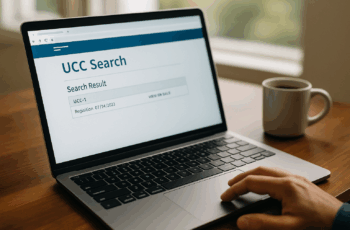
Do not rely only on a quick screenshot. Save the search result page, the filing image, and any amendments, continuations, assignments, releases, or terminations listed in the record. A lender may want to see more than the index summary.
Keep the filing number, filing date, debtor name, secured party name, collateral description, and current status. These details help the owner, lender, or attorney understand what the filing covers and what may need to happen next.
Create one folder for all UCC materials. Use simple file names with dates, such as UCC_Search_2026-07-05.pdf or UCC3_Termination_Received_2026-07-10.pdf. Organized records can save time during underwriting.
How to Read the Collateral Description
The collateral description is one of the most important parts of a UCC filing. It tells other lenders what assets may be covered. Some descriptions are narrow, while others are broad.
A narrow filing may list one piece of equipment, a vehicle, certain inventory, or specific receivables. A broad filing may refer to all assets, all business assets, accounts, inventory, equipment, general intangibles, or proceeds. Broad language can affect more financing options than a business owner expects.
Read the collateral section carefully. Compare it with the new loan request. If a prior filing covers the same assets a new lender wants to use, the new lender may need the old filing cleared, narrowed, or subordinated.
Collateral language can be technical. If the filing is broad, disputed, or connected to a major financing deal, ask a qualified attorney to review it. A short legal review may prevent a costly closing problem.
Who Is the Secured Party?
The secured party is the creditor or lender listed on the UCC filing. Sometimes this is the original lender. Other times, the filing may have been assigned to another lender, finance company, or servicing entity.
Always check for assignments or amendments. A business owner may think the original lender still controls the filing, but another secured party may now be responsible. Contacting the wrong party can waste time.
When requesting a release or termination, use the current secured party information from the record. Include the filing number, debtor name, date filed, and proof of payoff or satisfaction when available.
Common UCC Lien Problems
Some UCC lien issues are simple. Others take longer. The best response depends on why the filing is still active and what the new lender needs.
- Old debt was paid off. Ask the secured party for a UCC-3 termination and keep proof of payoff.
- The filing covers too much collateral. Ask whether a partial release is possible.
- The new lender needs priority. The lenders may need a subordination agreement.
- The debtor name is wrong. Ask the secured party or an attorney how to correct the record.
- The secured party changed. Review assignments before sending requests.
A lender may not require every UCC filing to be removed. Sometimes the issue is priority, not existence. The new lender will usually explain what must be cleared before closing.
What Is a UCC-3 Termination?
A UCC-3 termination is a filing used to show that a financing statement is no longer active. It is commonly used after a secured debt has been paid or the secured party no longer claims an interest in the collateral.
In many cases, the secured party files the termination. The business owner should ask for confirmation and a copy once it is filed. Then the owner should re-search the state records to confirm that the termination appears.
Do not assume that a payoff letter alone removes the filing. A payoff letter may help prove the debt was satisfied, but the public record may still need to be updated. Keep both the payoff proof and the filed termination.
Partial Releases and Subordinations
A termination is not the only possible fix. If a filing covers more collateral than needed, a prior lender may agree to a partial release. That can remove certain assets from the lien while leaving the rest of the filing in place.
A subordination agreement is different. It usually means one lender agrees to let another lender take priority in certain collateral or under certain terms. This may be used when the old debt is still active but the new loan can move forward with an agreed priority structure.
These agreements can be technical. Business owners should not sign or rely on them without understanding what rights are being changed. A lender, attorney, or qualified adviser can help explain the effect.
Timing Tips for Faster Closings
Search for UCC liens early in the application process. Do not wait for final approval or closing week. If an old filing appears, the owner may need time to locate the lender, request documents, and wait for state records to update.
Share search results with the lender as soon as possible. If the lender sees a problem early, the fix can often begin while underwriting continues. That is easier than trying to resolve everything at the end.
Ask the prior lender for written confirmation of next steps. Find out whether they will file the UCC-3, how long it may take, and when they can provide a copy. Keep all emails, payoff letters, and filing confirmations.
After the correction is filed, re-search the state index. Save the updated record. A clean follow-up search can help reassure the new lender that the issue has been handled.
Paper Trail Lenders Like to See
A clear paper trail can make a UCC issue easier to review. Lenders do not want to chase missing information. They want to see what was filed, what was paid, what was released, and what still remains.
Keep a folder with the original search results, filing images, amendments, payoff letters, release requests, termination copies, and updated search results. Add short notes explaining dates and contacts.
For example, a note might say, “Prior equipment loan paid on June 10. UCC-3 requested June 12. Termination filed June 18. State search confirmed June 20.” Simple notes can make the file easier to understand.

How UCC Liens Relate to SBA and Bank Loans
SBA and bank lenders often review collateral carefully. They may look for existing liens, lien priority, collateral descriptions, and any filing that could affect their position. UCC issues can therefore become part of the closing checklist.
A broad lien may affect equipment, receivables, inventory, or other business assets. That can change how a lender views the file. It may also affect whether the lender needs a release, payoff, subordination, or additional documentation.
Owners should also review related loan terms, including covenants, reporting requirements, insurance obligations, and collateral maintenance rules. A UCC filing is only one part of the larger financing agreement.
For broader loan preparation, review business loan requirements lenders usually want to see and the role of collateral in small business loans.
UCC Lien FAQs
Does a UCC filing hurt my credit score?
A public financing record is not the same thing as a credit score item. However, lenders can still treat the filing as an important business financing issue. It may affect collateral, priority, and approval conditions.
How long does a UCC filing last?
Many UCC-1 financing statements are effective for five years, but secured parties may be able to continue them with the proper amendment. Business owners should check the state record instead of assuming a filing has expired.
Can I sell equipment that is covered by a UCC filing?
Do not sell collateral without reviewing the loan agreement and getting any required consent. A lender may have rights in the equipment, proceeds, or replacement assets. Written approval is safer than relying on a verbal answer.
Can an old UCC filing block a new business loan?
It can delay or complicate the process, especially if the filing covers assets the new lender wants as collateral. The lender may ask for a termination, release, subordination, payoff, or other documentation before closing.
Who should file the UCC-3 termination?
In many cases, the secured party files the termination after the debt has been satisfied. Business owners should ask for a copy and confirm that the state record has been updated.
When to Call an Attorney
Some UCC questions are simple recordkeeping issues. Others are legal issues that should be reviewed by an attorney. Contact an attorney if there is a dispute, a bankruptcy concern, a priority fight, a business sale, or a major closing at risk.
Legal help may also be important if the collateral language is broad, if the secured party refuses to cooperate, or if the owner believes the filing is inaccurate. The larger the financing transaction, the more important it is to get the issue right.
Step-by-Step Recap
- Search the state UCC index using the exact legal business name.
- Save the filing, search results, amendments, assignments, and status information.
- Read the collateral description carefully.
- Identify the current secured party.
- Compare the filing with the new loan’s collateral needs.
- Ask whether a termination, partial release, payoff, or subordination is needed.
- Keep written proof of every request and response.
- Confirm the filing update with a follow-up state search.
Final Thoughts on UCC Liens
UCC liens are not always a problem, but they should never be ignored during a business loan application. A filing can affect collateral, priority, and closing conditions. Finding it early gives the owner more time to respond.
Start with an official state search, save the records, read the collateral description, and identify the current secured party. If the debt has been paid or the lien is too broad, ask what documentation is needed to clear or narrow the filing.
Good records can help a financing file move more smoothly. When the issue is complex, get qualified legal advice before relying on assumptions. A clean paper trail can protect the business and reduce last-minute closing delays.
Helpful Resources
- Uniform Commercial Code — Uniform Law Commission
- State filing office directory — NASS
- SBA Loans Overview — SBA.gov
- The Role of Collateral in Small Business Loans
Editor’s Note: This article was updated and expanded in June 2026 for clarity, accuracy, and reader usefulness.
Disclaimer: This article is for general educational purposes only and is not financial, legal, tax, lending, or investment advice. UCC filings can involve legal rights and state-specific procedures. Business owners should consult a qualified attorney, lender, or adviser before making decisions about liens, collateral, releases, or loan documents.
Photo Credit: All images © Sloan Digital Publishing and licensed stock sources. Used with permission.